

Colectiv Adaptation Lab

Now selecting partners for 2027

Programmes need to understand what is holding back progress, decide what to change, and find out whether that change works.

The Colectiv Adaptation Lab brings together programme data, frontline and community insight, behavioural science and practical impact evaluation. We help teams develop improvements grounded in how delivery works, and test their effects on outcomes that matter.

We are selecting a small number of implementing and funding partners for our 2027 Lab projects.

Explore a potential partnership

Is your programme a good fit?

The strongest opportunities have four things in common.

An outcome that matters

An important behaviour or service outcome you want to improve, such as uptake of a programme, with existing data or a feasible way to measure it.

A question worth answering

You want to understand how practical barriers, motivations or social pressures shape behaviour, and which changes could improve delivery.

People close to the answer

Frontline teams, service users or communities can explain the realities of delivery and help shape changes that are workable in their context.

Room to act

Your team has the authority and capacity to change delivery, test an adaptation and use the findings to decide what happens next.

For example

A vaccination programme that tracks completion rates, wants to understand why some families don’t attend, can hear from community health workers, and has scope to change delivery.

  • An outcome that matters
  • A question worth answering
  • People close to the answer
  • Room to act

How it works

We begin with a focused opportunity and build the partnership around what the programme needs. Each stage has a clear purpose, with further work agreed where there is a strong case to continue.

Read more about our approach

  1. 1

    Initial Scoping

    No cost

    Selected programmes begin with a no-cost scoping phase. Together, we review priority outcomes, existing evidence and opportunities to adapt delivery. We then identify where further investigation or testing could help, and agree on a practical starting point.

  2. 2

    Adaptation Sprint

    A paid engagement of around two months, focused on one live delivery question. We analyse programme data and gather targeted insight from people close to delivery, then work with your team to develop a feasible adaptation.

    The Sprint produces a practical change and an agreed plan for implementing and testing it. Where the programme’s systems and timing allow, an initial test can also take place during the Sprint.

  3. 3

    Embedding Adaptation

    We work alongside your team to embed regular learning, testing and adaptation into programme delivery. Together, we put changes into practice and test whether they improve outcomes, using routine data and randomised controlled trials where suitable.

    Each cycle helps you decide what to adopt, refine or stop. We build the tools, skills and working routines your team needs to continue improving, and make regular adaptation part of how the programme is managed.

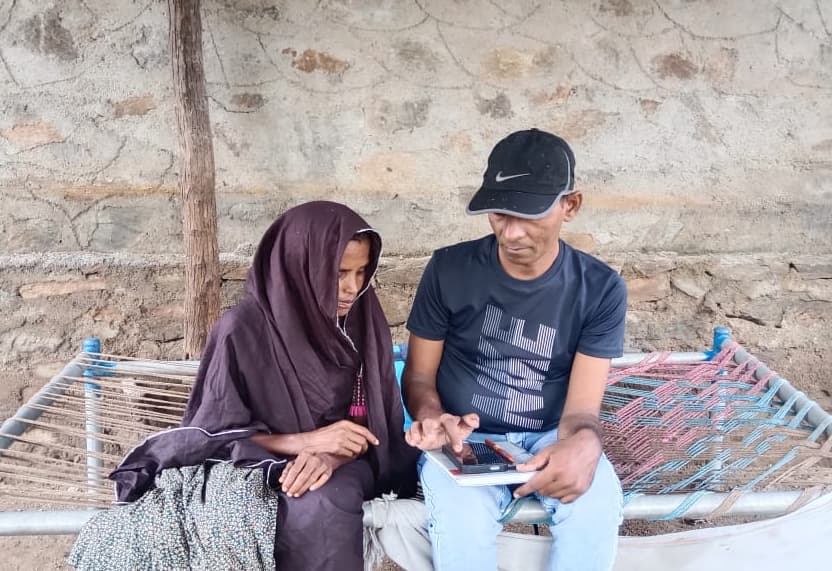
Frontline workers helping community members record voice-note interview responses

From frontline insight to practical change

Working with the Centre for MicroFinance, IWMI and IDS in Rajasthan, India, Colectiv helped explain differences in microirrigation uptake.

  1. What we heard

    Repeated AI WhatsApp interviews over 6 months revealed that community water champions often lacked the confidence and knowledge to navigate government schemes.

  2. What changed

    Programme teams used the findings to redesign training and strengthen support for government engagement.

Read the Rajasthan case study

Stewart Kettle

Previous trials by our team

Work undertaken by our co-founder Stewart Kettle and colleagues at the Behavioural Insights Team, before Colectiv.

Moldova · Randomised controlled trial

Making TB treatment easier in Moldova

A randomised trial with the Ministry of Health and 197 patients tested whether sending videos of medication-taking could replace daily clinic visits. Observed adherence was 87% with video observation, compared with 48% with clinic visits. Patients also saved around 15 hours per month and reported greater satisfaction with treatment.

Read the study (opens in a new tab)

Observed adherence

Daily clinic visits48%

Video-observed87%

Guatemala · Cluster-randomised trial

Strengthening school management in Guatemala

A cluster-randomised trial with the Ministry of Education across most upper secondary schools in Guatemala tested simple “rules of thumb” guidance, checklists and training for principals. Teachers reported a 10% increase in the proportion of principals holding regular lesson-planning meetings and a 6% increase in those conducting regular classroom observations. Teacher job satisfaction improved, but maths and reading scores did not.

Read the study (opens in a new tab)

Principals doing this regularly, as reported by teachers

Lesson-planning meetings+10%

Classroom observations+6%

For funders

The Lab offers a practical way to help partners improve delivery and build evidence for their next decisions.

Talk to us about your portfolio

Work with us

If you run or fund a programme with an important outcome to improve and room to test a change, we would like to hear from you.

You may have a delivery problem to investigate or an adaptation already in mind. We can explore where the Lab would be useful and what a practical first step could look like.

Put forward a programme